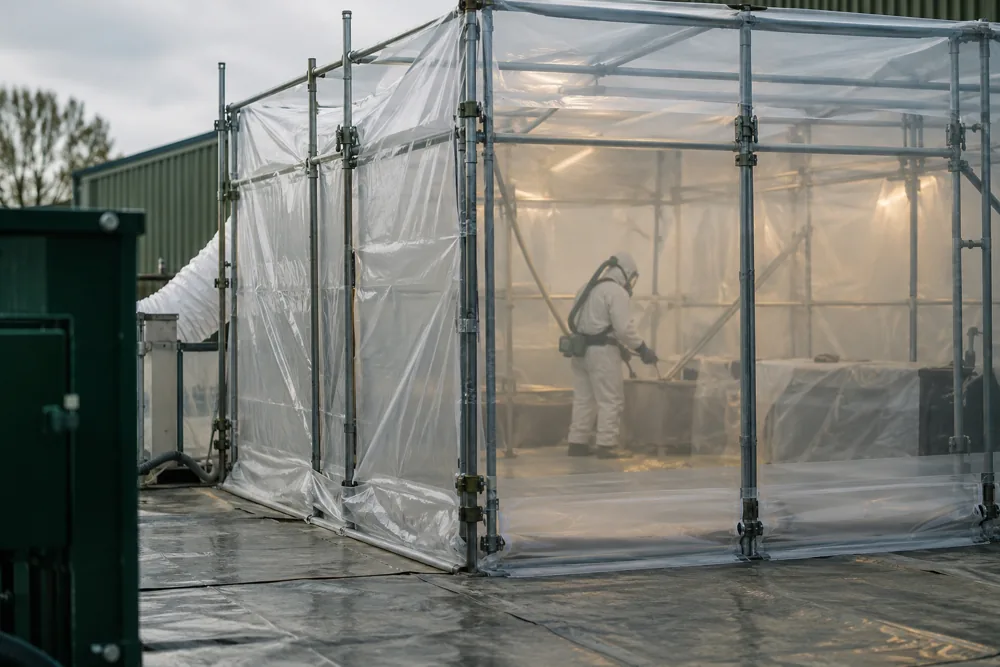
Removal Starts With The Material
Asbestos removal is a controlled building operation, not simply a clearance task. The type of material, its condition and the proposed method determine the precautions. An intact cement sheet and damaged insulation can require very different arrangements, even when they are found on the same industrial site.
Before a quotation, share the survey, sample results and photographs taken from a safe position. If the material has not been identified, arrange appropriate investigation first. Do not break a suspect product to help describe it or send loose material through the enquiry process.
When Removal Is The Right Option
Removal may be needed where planned construction will disturb an asbestos-containing material or where deterioration makes management unsuitable. An asbestos finding in a Coventry factory or office can call for management in place rather than a full strip-out. The decision should consider condition, accessibility and the building’s intended use.
For a factory or occupied office, discuss the interface with production, deliveries and staff routes. Work areas may need isolation and a temporary change to how the premises operate. Early planning gives the project team a chance to resolve these conflicts before contractors arrive.
Licensing And Safe Planning
The Control of Asbestos Regulations 2012 govern work with asbestos. Work must be classified correctly as licensable, notifiable non-licensed or non-licensed. Licensable work requires an HSE-licensed contractor, and the applicable notification arrangements must be built into the programme.
The plan of work should describe the actual task, containment requirements, decontamination, waste route and foreseeable site problems. Generic paperwork is not enough to explain a complex occupied building. Ask which contractor will undertake the work and check the evidence relevant to the work classification.
How The Project Is Sequenced
The first stage is to confirm the material and extent of removal. The next is to agree access, isolation, welfare and any protective arrangements around neighbouring areas. The contractor then establishes the controlled work area appropriate to the job before removal begins.
After removal, cleaning and inspection take place before the space is handed back. Where applicable, independent analytical assessment and clearance certification form part of that handover. Agree these responsibilities at the quotation stage so the removal contract and analyst’s instruction fit together.
Cost And Programme Considerations
The amount of material is only one factor in an asbestos removal quotation. Material type, condition, access height, enclosure design, service isolation and waste handling may affect the work more than the apparent size of the area. A roof project also needs a separate plan for safe access and subsequent weatherproofing.
Ask whether the quote includes preparatory work, waste documentation, analytical attendance and making good. Reinstatement and replacement materials should be described separately where needed. We do not publish standard prices because a safe scope depends on the site and the proposed method.
Records At Handover
Request a clear record of the locations treated and any asbestos that remains. Keep waste paperwork and relevant clearance documents with the project file. Update the asbestos register so the next maintenance team receives an accurate picture of the building.
Do not treat an air result alone as evidence that every hidden material has been removed. The agreed scope and final records must be read together. If later works extend beyond that scope, check the survey information again before disturbing the adjoining fabric.